
9th July 2026
Aluminium’s natural oxide film forms almost immediately upon exposure to air, providing corrosion resistance but complicating finishing processes like coating adhesion and welding. This oxide layer, beneficial for bare metal, can hinder processes requiring a clean metal surface. Many specifications overlook this aspect, leading to issues with adhesion, appearance, and rework on large industrial components.
Aluminium’s self-protective reputation is valid but limited. The oxide film, while resisting corrosion, can impede downstream finishing if treated like ordinary dirt. Coating systems require a solid surface for bonding, and the presence of oxide can lead to poor adhesion and reduced durability.
Effective finishing begins with evaluating whether the oxide layer aids or obstructs the next step.
In architectural and structural applications, this distinction is crucial. High-specification coating processes demand surface preparation aligned with the end use, not just a simple cleaning.
Key considerations include:
Subsequent Processes: Oxide removal may be necessary if the part will be coated, bonded, or welded.
Finish Importance: High-value, visible metalwork requires precise preparation.
Rework Risk: For large fabricated items, coating failures are costly to correct.
In mixed-metal systems, understanding aluminium’s distinct behaviour or from steel is essential. For more on corrosion protection, refer to this guide on protecting metal from rust.
A freshly cleaned aluminium surface might still yield poor coating results due to the rapid formation of an oxide layer. This layer, while not visible, can prevent effective bonding between the substrate and subsequent treatments. In industrial applications, ensuring a predictable surface is crucial for the coating’s performance, appearance, and warranty compliance.

A degreased part may still be inadequately prepared. Cleaning eliminates oils, dust, and dirt, while deoxidizing removes the oxide film on the metal. Ignoring this distinction can lead to a weak bond, causing adhesion or appearance issues later on. This often surprises fabricators with larger assemblies, where finishes fail under stress at edges or weld zones.
For architectural and industrial projects, substrate preparation must align with the finish system. Powder coatings and primers require a uniform surface. Remaining oxide can cause adhesion loss and uneven appearance. Larger projects expose these inconsistencies more than smaller test pieces. Workshops using abrasive methods should understand the differences between treating aluminium and steel. Learn about shot blasting.
The oxide barrier is problematic when reliable substrate contact is needed, such as in decorative coatings or adhesive bonding. It can affect scheduling and lead to delays or additional work. Proper deoxidising minimises rework.
The required deoxidising depends on the metal’s condition. Fresh, cast, and polished parts have different needs. Some require light chemical treatment, while others need more thorough deoxidising to remove contamination. Firms must decide if basic cleaning is sufficient or if specialist treatment is needed. Ultrasonic systems can aid in residue removal.
For valuable aluminium, the process begins with the finish specification and potential risks, working backwards to the preparation method.
The best method depends on the subsequent treatment of the aluminium. For powder or high-performance finishes, deoxidising should leave a clean, even surface. Fast methods that leave an inconsistent profile can lead to costly rework.
This method removes oxide through abrasion and can suit heavier fabrications. It is quick and can fit existing preparation lines, but it must be carefully controlled on aluminium to avoid surface damage that could affect adhesion or appearance.
When Mechanical Methods Are Suitable
Heavy Contamination: Requires physical removal for effective preparation.
Large Components: Structural items can handle controlled abrasive prep.
Existing Blasting Processes: Can integrate deoxidising when media and profile are controlled.
Learn about shot blasting and Evo Dyne Products’ cleaning support for comprehensive preparation.
Using controlled solutions, this method is often chosen where uniformity and surface quality are critical, particularly before high-specification finishes. It can work well on more complex shapes and helps deliver consistent results where appearance and coating performance matter
Appearance-Critical Finishes: Ensures uniform results.
Complex Geometries: Handles recesses and internal faces effectively.
Need for Consistency: Easier to standardise than manual methods.
Strict Coating Performance Requirements: Critical for powder and specialist coatings.
| Method | Best For | Key Advantages | Key Considerations |
|---|---|---|---|
| Mechanical abrasion | Heavy contamination, sturdier fabrications | Fast, practical, fits workshop prep | May damage aluminium, inconsistent |
| Shot blasting | Large industrial items in abrasive prep | Efficient for large work, suits flow | Requires controlled media on aluminium |
| Chemical deoxidising | Uniform prep before high-spec finishes | Consistent surface, handles complex shapes | Needs controlled chemistry and rinsing |
For large projects, the choice between mechanical and chemical methods depends on whether they support the coating specifications without causing failures. Consistent pretreatment is crucial when aluminium is part of a broader project with high-build coatings.
For project advice or a quotation, contact NSP Coatings to discuss the most suitable preparation and coating system.
No aluminium preparation process is professional if safety is treated as an afterthought.
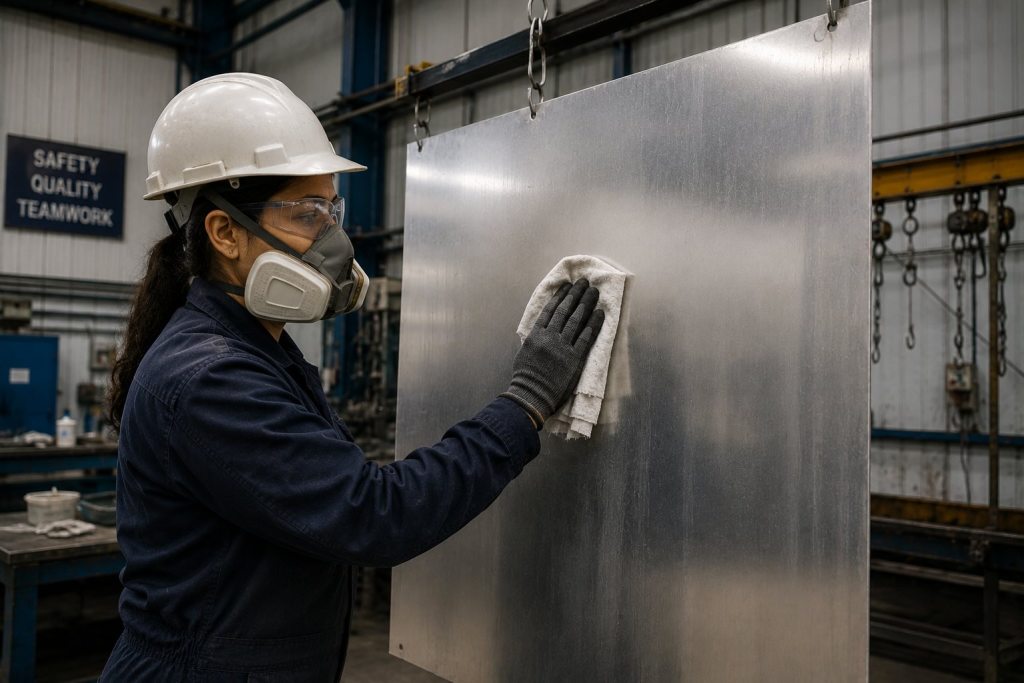
Mechanical methods generate dust, noise, and rebound hazards, while chemical methods pose risks of acid exposure, splashes, and waste management. These issues impact quality control and safety since unsafe processes are often unstable.
PPE requirements depend on the chosen method. Mechanical preparation needs respiratory, eye, hearing protection, and suitable clothing. Chemical treatment requires acid-resistant gloves, face protection, aprons, and ventilation. Proper PPE selection should be planned ahead.
Resources like Refinery Work Wear Canada safety solutions provide insight into protective equipment categories. However, managers must perform method-specific risk assessments.
Incorrect glove use: Ensure gloves are acid-resistant for chemical PPE.
Inadequate splash planning: Face protection is crucial during dipping, transferring, or rinsing.
Underestimating dust: Proper respiratory control is needed for fine particles.
For coating operations, see powder coating personal protective equipment requirements.
Environmental responsibility is an important part of process selection. Finishers need to consider current chemical controls, waste handling requirements and site-specific compliance obligations when choosing any pretreatment system
A visual guide can clarify metal preparation realities:
Environmental compliance affects deoxidizer use, handling, and process viability under evolving regulations.
Proper handling of spent chemicals, rinse water, and residues ensures legal compliance and consistency in quality control. Effective storage, separation and disposal practices correlate with quality management, prompting many projects to use controlled finishing environments.
A deoxidised surface requires verification beyond appearance. Ensuring the removal of oxides and contaminants and completing rinsing is crucial before advancing to the next finishing stage.

The water break test is an essential floor-level check. Properly prepared surfaces should allow water to spread continuously. If water beads or pulls back, contamination or residual oxide is present. This test is easy to execute without delaying work, indicating surface readiness.
A thorough verification process includes:
Visual inspection: Check for dark patches or incomplete preparation.
Water behaviour check: Consistent water distribution is preferable to random beading.
Clean wipe confirmation: A white cloth should remain clean after preparation.
A shiny aluminium surface isn’t necessarily clean; verification ensures cleanliness.
Aluminium starts re-oxidizing upon air exposure. Thus, deoxidising should occur within a controlled sequence, moving quickly from preparation to finishing. The next stage, whether powder coating, hot zinc spray, or intumescent paint, relies on substrate condition.
A reliable process involves:
Inspecting the substrate for marks or uneven oxide removal.
Confirming surface condition with a water break test.
Proper rinsing and drying to avoid residue in the coating stage.
Applying the finish quickly to prevent re-oxidation.
For quality assurance, refer to the powder coating quality control crosshatch adhesion test.
Deoxidising ensures a bondable surface, crucial for coating performance. On large items, this distinction saves time by emphasizing preparation over mere tidiness.
In-house deoxidising suits simple tasks if parts are manageable and controls are in place. However, larger components introduce handling and compliance challenges. For architectural, structural, or high-visibility items, tighter tolerances necessitate outsourcing.
Outsourcing is advisable when:
Parts are large or awkward: Standard workshops struggle with consistent treatment.
Specifications are strict: Requires tight process control.
Chemical compliance is crucial: Adds complexity and risk.
Process selection is needed: Deciding between deoxidizing and advanced blasting.
The Production Machining article on deoxidizing aluminum highlights the need for cost-benefit clarity between chemical and mechanical preparation.
For projects in Kent, Essex, London, and Surrey, logistics may favour outsourcing. Heavy items require precise handling, making specialist control more economical than rework.
Ready to ensure your project is done right, the first time? Contact Us Today or call us on 01474 363719 for a quotation.
NSP Coatings handles large industrial metalwork for contractors, fabricators and specifiers who need preparation and finishing done properly from the start. For help with aluminium preparation, coating selection and full project delivery, get in touch via the NSP Coatings contact page or call 01474 363719 to get a quotation today.

